Village life
Heritage Centre
Telling the village story from the last medieval walls in Churchill, looking over the lost village of 1684.
Telling the village story
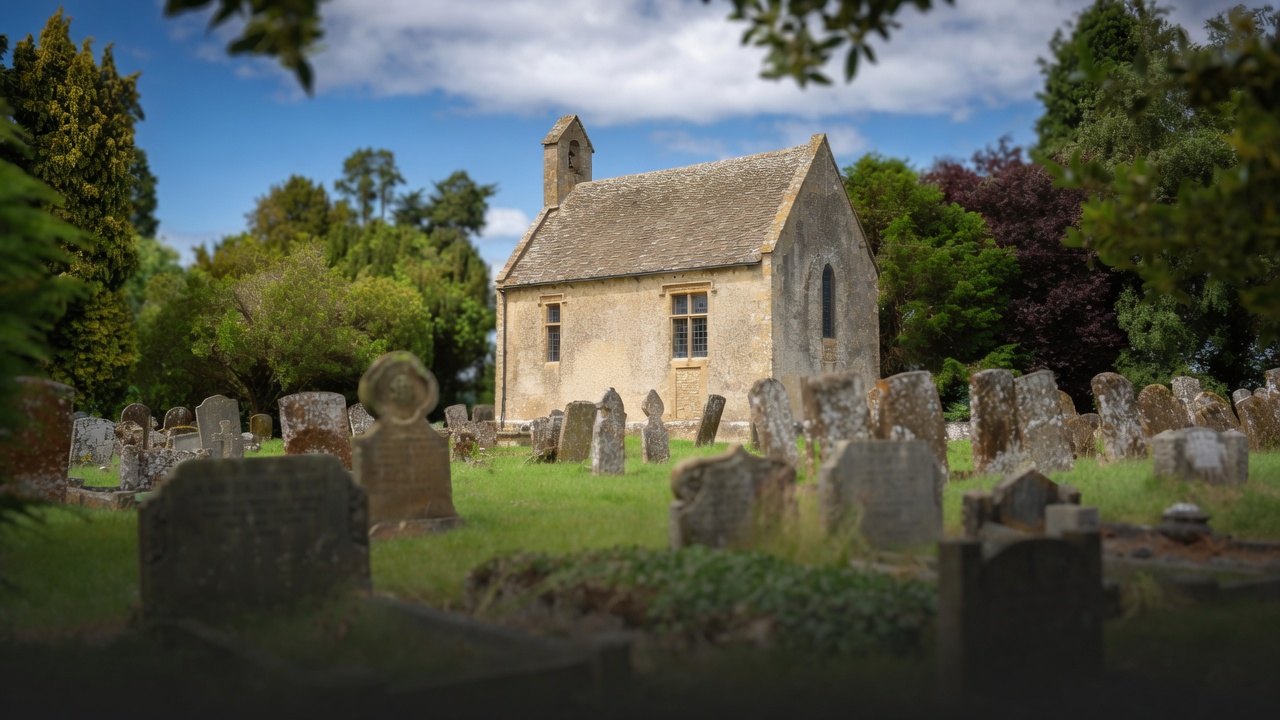
Overlooking the ‘lost’ village destroyed by fire in 1684, the remains of the chancel of the medieval church are home to the Churchill and Sarsden Heritage Centre. It tells the story of the village with touchscreens and digital displays. It may be the smallest museum in Oxfordshire.
Roman and Saxon remains have been found nearby, and it is believed a Christian church stood here in Saxon times. The present walls were probably raised by the de Noer family, lords of the manor, in the early fourteenth century. After the fire the village moved up the hill and the old church was left at the edge. When Langston built All Saints in 1827, the chancel was kept as a mortuary chapel.
Demolition was threatened in the 1980s. A Preservation Society formed in 1988; the Heritage Centre opened in the restored chancel in 2001, and was refurbished with a Heritage Lottery Fund grant in 2010.
Touchscreens tell the stories of two sons of the village: Warren Hastings, first Governor-General of India, born here in 1732; and William Smith, “Strata Smith”, the father of English geology, born here in 1769. James Langston’s part in the community is also displayed. A current exhibition, curated by Anita Hasler, traces connections between Hastings, the Leighs of Adlestrop and the Austens of Hampshire.
Two publications can be bought at the Centre or ordered by email: A History of Churchill and Sarsden by Ralph Mann, and Churchill Village Trails.
On film
The Cotswold Explorer visits Churchill
Robin Shuckburgh walked the churchyard, the green and the old chancel for his series Hidden Gems in the Cotswolds: a gentle half-hour on how the village came to sit where it does.
More of the village story